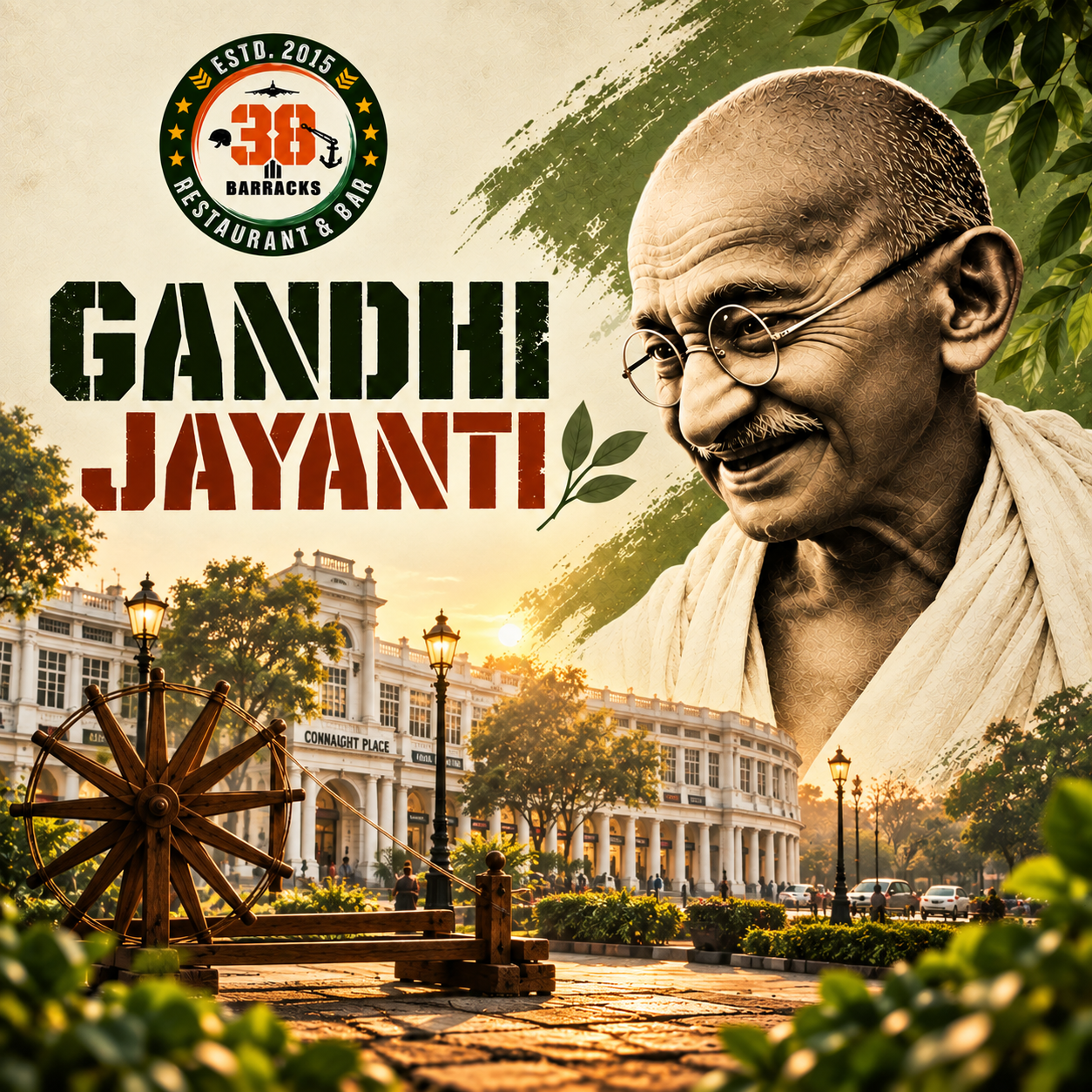
Great food is not always about luxury or complexity. Sometimes the most familiar ingredients carry the longest stories: grain ground into flour, lentils cooked slowly, vegetables chosen in season and a meal made meaningful by the people sharing it.
Every 2 October, India observes Gandhi Jayanti, the birth anniversary of Mohandas Karamchand Gandhi. His public legacy is inseparable from truth, non-violence and the freedom movement. Food was a quieter but persistent part of his personal experiments with discipline, health and ethical living.
This is not a claim that one modern restaurant dish represents Gandhi's diet, or that he followed one fixed menu throughout his life. His views changed, sometimes sharply. The more useful connection is between his questions about food and the way Indian kitchens continue to find depth in everyday ingredients.
Gandhi Ji's Food Philosophy Was an Evolving Experiment
Gandhi wrote and spoke about diet over many years. In Key to Health, he considered cereals, pulses, vegetables, fruits, nuts, fats and milk, while stressing restraint and the body's needs. His ideas belong to their historical context and should not be treated as current medical advice.
He remained committed to vegetarianism, but that does not mean his diet was static. He experimented with raw food, fruit, fasting and the exclusion of different ingredients. His relationship with milk changed too: after taking a vow against cow and buffalo milk, he later accepted goat's milk during serious illness. He wrote candidly about the tension he felt over that decision.
This matters because neat online claims about ‘Gandhi's favourite food’ can flatten a complicated life into trivia. Reliable sources show an ongoing inquiry rather than one lifelong plate. The recurring ideas were self-control, attention to what the body required and concern for the moral and social meaning of consumption.
Read Gandhi's Key to HealthExplore Gandhi's writings on diet and diet reform
Sabarmati Ashram: Food Within a Shared Way of Life
Sabarmati Ashram stood on the banks of the Sabarmati River in Ahmedabad and was Gandhi's home from 1917 until 1930. The official Ashram history describes it as a centre for the search for truth, non-violence, manual labour, agriculture and self-sufficiency. It was also from here that Gandhi began the Dandi March in March 1930.
The Gandhi Heritage Portal records that Ashram residents ate together in a common kitchen. That detail makes the food story larger than a list of ingredients. Preparing and eating a meal became part of community life, shared work and everyday discipline.
Ashram observances framed eating as a means of sustaining the body for service and argued against self-indulgence. A modern reader may not adopt those rules literally, but the questions remain recognisable: How much is enough? What do we waste? Do we notice the labour behind our food?
Read the official history of Sabarmati AshramRead the Ashram observances
Why Simple Indian Food Still Feels Complete
Indian home cooking has never been one uniform cuisine. Region, season, faith, household practice and access all shape what reaches the table. Yet grains, pulses, vegetables, curd, fruit, nuts and spices recur in countless local combinations.
A simple meal can be deeply satisfying because technique does so much of the work. Lentils change through soaking, simmering and tempering. Wheat becomes soft bread on a hot tawa. A seasonal vegetable takes on character through roasting, steaming or a carefully measured spice mixture.
Simplicity is not the absence of skill. It can mean clarity: ingredients that still taste like themselves, portions chosen with attention and preparation that serves the meal rather than hiding it. That is one reason familiar food can carry such emotional weight across generations.
Traditional Ingredients in a Modern Restaurant Setting
Modern Indian restaurants work in a very different context from an ashram kitchen. They are places of hospitality, celebration and choice. It would be misleading to suggest that a rich restaurant preparation follows Gandhi's personal diet simply because it contains lentils or vegetables.
The honest connection lies elsewhere. Contemporary kitchens continue to work with ingredients that have long anchored Indian food: grains, pulses, paneer, vegetables, curd, herbs and spice. They may present them through regional recipes, tandoor cooking, contemporary plating or dishes designed for sharing.
At 38 Barracks in Connaught Place, the current food journal includes vegetarian and non-vegetarian choices across North Indian, Continental and Pan-Asian cooking. Diners looking for vegetarian options can explore dishes such as Paneer Tikka, Bullet Chaap, Asian Veg Dimsum and Rainbow Sushi. Availability and recipes can change, so the current menu remains the right source before a visit.
Five Ideas Worth Carrying to the Table
Gandhi's personal dietary rules were his own, and some of his historical health claims should not be adopted without modern professional guidance. The broader questions behind them, however, can still sharpen the way we approach a meal today.
- Respect ingredients: food represents soil, water, labour, transport and time.
- Order with awareness: begin with what the table can reasonably finish, then add more if needed.
- Value familiar food: tradition does not become less meaningful because its ingredients are ordinary.
- Ask rather than assume: check allergens, dietary requirements, current recipes and portions with the restaurant.
- Give attention to company: a shared meal is also time set aside for conversation and presence.
Observing Gandhi Jayanti in Connaught Place
A national commemoration deserves more than promotional language. Gandhi Jayanti can be a day to read, visit a museum or memorial, reflect on non-violence, support constructive community work and examine one's own habits with honesty.
Food can be part of that reflection when approached thoughtfully. Choose a vegetarian meal if that has meaning for you. Avoid ordering beyond what your group can finish. Learn where a familiar dish comes from. Thank the people who prepared and served it.
If the day brings you to Connaught Place, 38 Barracks offers a distinctive military-inspired setting and a menu with vegetarian choices. The restaurant is not presented as a recreation of Gandhi's table. It is simply a contemporary place where diners can appreciate Indian ingredients, hospitality and the enduring value of eating together.
Learn about the 38 Barracks storyCheck visiting information before you arrive
The Legacy of Simple Food
From the common kitchen at Sabarmati Ashram to today's homes and restaurants, food continues to reveal how people live together. The settings have changed, but care, restraint and respect remain useful measures of a meal.
On Gandhi Jayanti, the point is not to romanticise scarcity or turn Gandhi's experiments into a fashionable diet. It is to pause over the values his questions bring into view: responsibility, self-examination and an awareness that even ordinary choices connect us with other people.
Sometimes a memorable meal begins with less spectacle and more attention—to an ingredient, to the hands behind it and to the person sitting across the table.
Frequently Asked Questions
What food did Mahatma Gandhi eat?
Gandhi followed a vegetarian diet, but his choices changed throughout his life as he experimented with health, restraint and ethics. His writings discuss cereals, pulses, vegetables, fruit, nuts and milk. No short menu captures every period, and his historical dietary views should not be treated as personalised medical advice.
What was Gandhi Ji's favourite food?
There is no reliable basis for presenting one dish as Gandhi's universal lifelong favourite. He repeatedly changed and tested his diet. It is more accurate to discuss his commitment to vegetarianism, simplicity and restraint than to attach his name to a single modern recipe without strong historical evidence.
Did Gandhi drink goat's milk?
Yes. Gandhi accepted goat's milk during serious illness after he had vowed to avoid cow and buffalo milk. His own writings show that he regarded the decision as morally complicated. This episode is another reason to describe his diet as evolving rather than fixed.
Why is Sabarmati Ashram connected with simple living?
Sabarmati Ashram was Gandhi's home from 1917 to 1930 and a centre for truth, non-violence, manual labour, agriculture and self-sufficiency. Residents shared meals in a common kitchen. Food therefore sat within a broader discipline of communal responsibility rather than standing alone as a lifestyle trend.
How can food be part of a thoughtful Gandhi Jayanti observance?
A thoughtful approach might include choosing a modest vegetarian meal, learning about Indian food traditions, ordering only what can be finished and reducing waste. Reading Gandhi's own work or the official Sabarmati Ashram history helps keep the observance grounded in reflection instead of unsupported food claims.
Where can I explore vegetarian food in Connaught Place?
38 Barracks Restaurant & Bar in Connaught Place has vegetarian and non-vegetarian choices across its current food journal. Vegetarian highlights listed on the website include Paneer Tikka, Bullet Chaap, Asian Veg Dimsum and Rainbow Sushi. Check the latest menu, prices and dietary details before ordering.